Member Spotlight

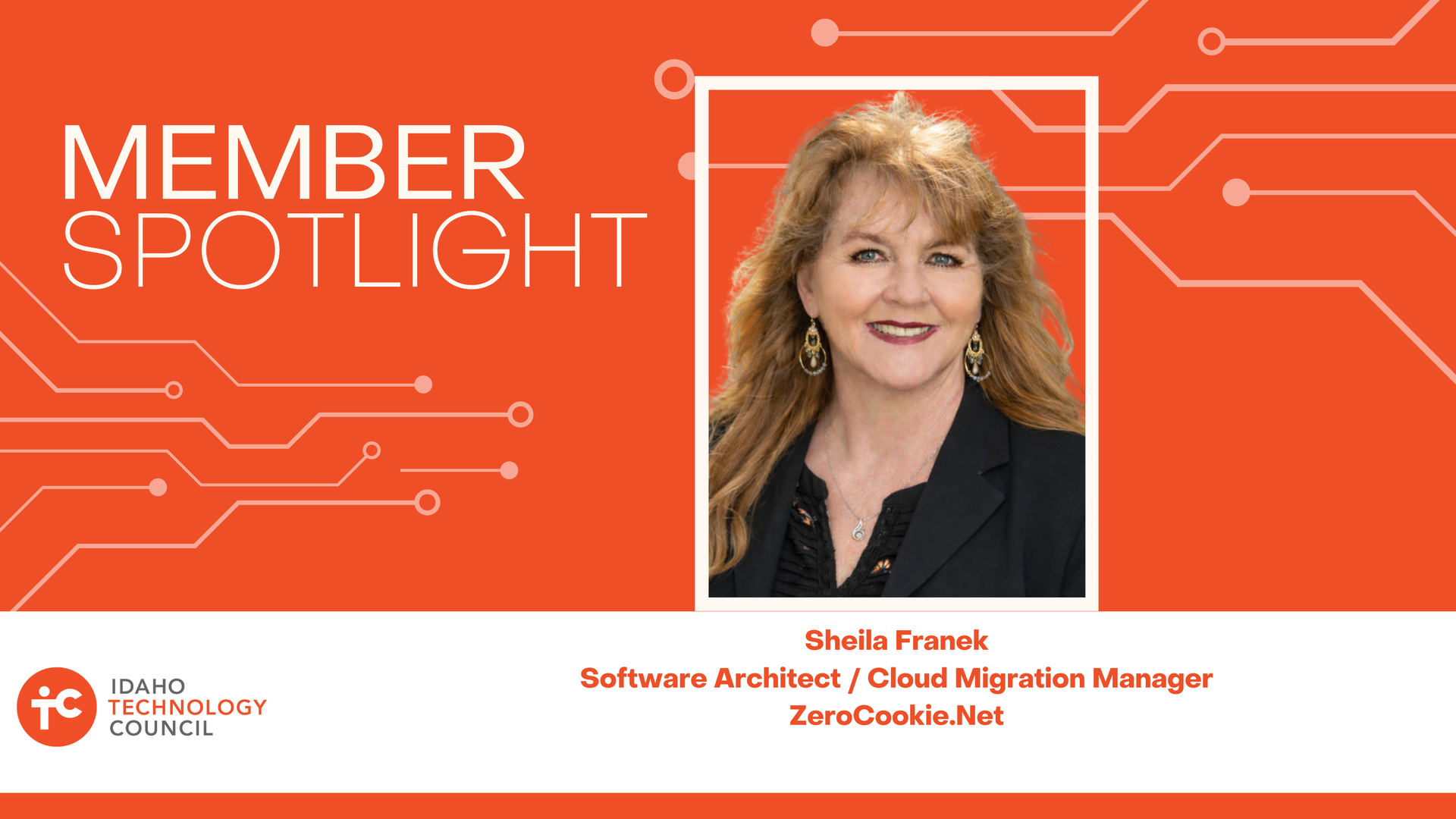
Introducing: Sheila Franek, Software Architect & Could Migration Manager, at ZeroCookie.NET


Describe the business/organization you work for:

ZeroCookie is built for organizations that want to offer a simple, trustworthy promise to their visitors: we don’t track you, we don’t sell your data, and you don’t need to click through a cookie banner. Many small websites want to respect privacy but don’t realize how many tracking scripts are quietly introduced through plugins, themes, and embedded tools. As a result, they rely on intrusive consent popups they don’t actually need. ZeroCookie scans for and disables tracking scripts, provides clear remediation guidance, and verifies true no-tracking compliance through an AWS-powered scanning and verification engine—allowing sites to remove cookie banners entirely and replace them with real privacy by design.


What inspired you to start your own business, or why did you decide to work for this specific organization?

I started this business after hearing the same frustration over and over from clients and everyday users: cookie popups are annoying, confusing, and feel meaningless. Most people don’t understand what they’re agreeing to, and most site owners don’t fully understand what their own websites are doing behind the scenes. I realized the real problem wasn’t consent—it was that tracking had become the default, even for businesses that never intended to collect data at all. ZeroCookie was born from the idea that privacy should be simple, honest, and proven by design, not buried behind popups and legal jargon


What sets this business apart from others in the industry?

What sets ZeroCookie apart is that it eliminates the need for cookie banners altogether instead of trying to manage them. Most tools in this space focus on collecting consent for tracking that’s already happening. ZeroCookie takes the opposite approach by identifying and disabling tracking at the source, then continuously verifying that no tracking is occurring. Rather than forcing users to accept confusing choices, ZeroCookie allows businesses to operate with a true no-tracking model and prove it through ongoing, automated verification. The result is genuine privacy by design, not privacy theater.


What challenges have you faced as a business owner or employee, and how did you overcome them?

One of the biggest challenges has been cutting through widespread confusion around privacy and compliance. Many businesses assume cookie banners are mandatory and don’t realize they’re often responding to a problem they don’t actually have. Overcoming this meant spending time deeply understanding the technical and regulatory landscape, then translating it into something practical and non-intimidating for nontechnical site owners. Another challenge has been building trust in a space crowded with fear-based compliance tools. We addressed that by focusing on transparency, clear explanations, and verifiable results—proving privacy through how the product works rather than through marketing claims.


What advice would you give to someone looking to join your industry?

Learn the fundamentals, build for the real world, and don’t chase hype. The best tech products are the ones that quietly work, scale cleanly, and solve real problems without getting in the user’s way.


About the Idaho Technology Council
The Idaho Technology Council (ITC) is a member-based organization that champions innovation and collaboration to grow Idaho’s economy through technology. Representing a dynamic and growing community of entrepreneurs, industry leaders, and policymakers, ITC connects vision with action to position Idaho as a hub for
innovation and opportunity. Learn more at www.idahotechcouncil.org.


Connect with Sheila on LinkedIn HERE

Check out  ZeroCookie.NET  HERE

by Tim Munkres 10 September 2026
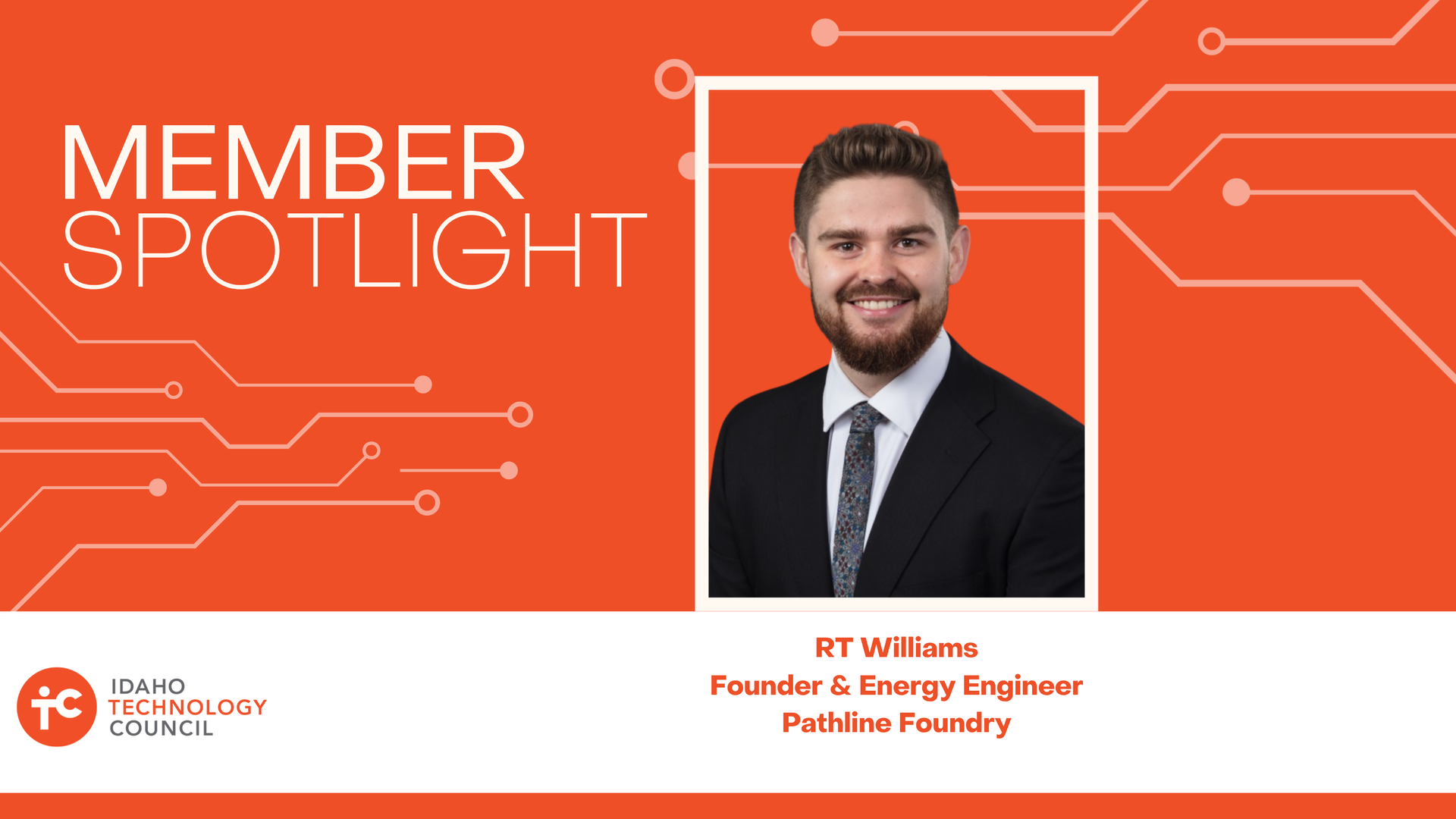
Introducing: RT Williams, Founder & Energy Engineer, Pathline Foundry Describe the business/organization you work for: Pathline Foundry is an independent energy consulting and software firm in Meridian, Idaho. I run the gamut from benchmarking and energy audits to custom software for energy strategy, management, and optimization. It's a niche offering that's widely applicable across many industries. One engineer, start to finish. See where your energy is going, so you can make a smarter decision about where it goes next. What inspired you to start your own business, or why did you decide to work for this specific organization? I want to be the person who stays and partners with those who need it most. I've been doing energy engineering since 2017, and I've kept seeing the same pattern. A building gets an audit report, the report goes on a shelf, and nothing changes. Pathline Foundry grew out of that pattern, and I build software for the same reason: the findings need somewhere to live once the engagement is over, or they end up back on the shelf. Energy gets treated as a fixed cost, a line on the bill you can't do anything about. It isn't. There's real money sitting in waste and inefficiency, and most of the people who could act on it have no spare bandwidth and limited technical staff. I wanted to make that easy to see and easy to act on. What sets this business apart from others in the industry? There's no sales team and no handoff to a junior analyst. You talk to the person doing the engineering, and that same person is still there when it comes time to implement. I build the software side myself too, so the analysis, the modeling, and the tools a client ends up using all come from one place. Where it fits, I take a share of the savings instead of a flat fee, so the work is built to pay for itself. I'm a PhD engineer and a Certified Energy Manager. I write the work so a decision-maker can understand it and an engineer can act on it. What challenges have you faced as a business owner or employee, and how did you overcome them? Starting a business in a state where nobody knows you is a slow problem, and there's no clever fix for it. My family and I moved here in 2025, and I spent a lot of that first year in rooms where I knew one person, or none. What surprised me is that it made the actual work better. I used to lead with what I found in a building. Now I ask what somebody is trying to decide first, because a room full of strangers teaches you quickly that nobody cares what you know until they know why it matters to them. That turns out to be most of the job. Idaho has been more welcoming than I expected. Almost everything I've built here started with someone making an introduction, and I look forward to growing my work to support the community that made room for me. What advice would you give to someone looking to join your industry? Go into the buildings. You can learn modeling and software anywhere, but you can't learn how a facility actually runs from a spreadsheet. Spend time with the people who operate it. They'll tell you things no data set contains, and more often than not, they already know where the waste is. About the Idaho Technology Council The Idaho Technology Council (ITC) is a member-based organization that champions innovation and collaboration to grow Idaho’s economy through technology. Representing a dynamic and growing community of entrepreneurs, industry leaders, and policymakers, ITC connects vision with action to position Idaho as a hub for innovation and opportunity. Learn more at www.idahotechcouncil.org . Connect with RT Williams on LinkedIn HERE Learn More about Pathline Foundry HERE
9 September 2026
Idaho Technology Council Announces 2026 Hall of Fame Inductees, Idavation™ Award Finalists and Keynote Speaker Gary Sorrentino, CIO, Zoom
by Diane Temple 3 September 2026
ITC partners with Coeur d'Alene Regional Chamber to host iTECH Summit Inland Northwest