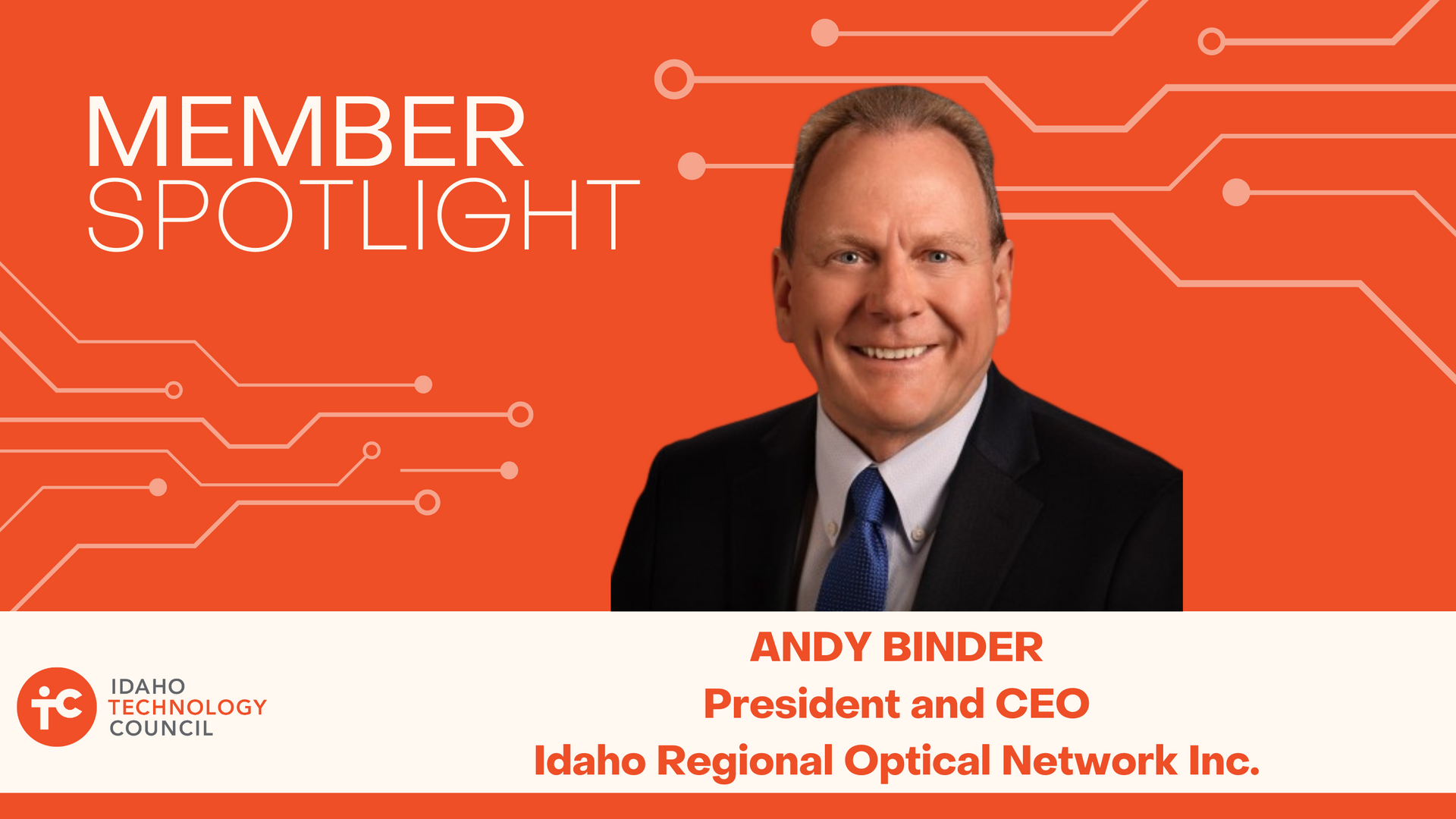
Member Spotlight

Introducing: Andy Binder, President and CEO, Idaho Regional Optical Network Inc.


Describe the business/organization you work for:

The Idaho Regional Optical Network (IRON) is a 501(c)(3) nonprofit organization dedicated to providing high-speed, fiber-optic connectivity to Idaho's nonprofit and public-sector communities, including education, research, healthcare, and government institutions. As a mission-driven organization, IRON focuses on delivering cost-effective, scalable, and high-performance networking solutions that empower its members to advance their work in the public interest.


What inspired you to start your own business, or why did you decide to work for this specific organization?

After a successful career in the private sector, I joined the Idaho Regional Optical Network (IRON) because I want to give back to the people of Idaho and make a lasting and meaningful difference in our communities. I believe that connectivity is a cornerstone of opportunity, and I'm passionate about bridging the digital divide, especially in rural and underserved areas of Idaho. Expanding access to high-speed infrastructure isn't just about technology, it's about keeping our next generation of students in Idaho, ensuring they have the resources and opportunities to thrive right here at home. My work with IRON is driven by a vision of a more connected, innovative, and prosperous Idaho, where technology helps every community and individual reach their full potential.


What sets this business apart from others in the industry?

What sets the Idaho Regional Optical Network (IRON) apart is our unique mission-driven approach as Idaho's only 501(c)(3) nonprofit regional optical network. Unlike commercial providers, we are not profit-driven and our sole focus is on serving Idaho?s nonprofit community, including education, research, healthcare, and public service organizations. Our statewide coverage ensures we can deliver an expansive, reliable, and resilient high-speed network to meet the diverse needs of Idaho, from connecting supercomputers at the Idaho National Laboratory to supporting community outreach for Idaho's universities and enabling highly reliable emergency services in remote counties. By investing in our infrastructure and prioritizing mission over margins, IRON provides Idaho's public-serving institutions with the connectivity they need to innovate, educate, and protect communities across the state.


What challenges have you faced as a business owner or employee, and how did you overcome them?

As a business leader, one of the biggest challenges I've faced is resistance to change. Whether it's adopting new technologies, shifting long-standing processes, or encouraging a new way of thinking. Change can be uncomfortable, especially in industries where stability and tradition are highly valued.

To overcome this, I've focused on building trust, communicating a clear vision, and demonstrating value. I've learned that people don't resist change itself, they resist uncertainty. By actively listening to concerns, providing transparent information, and showcasing real-world benefits, I've helped teams and stakeholders see change not as a disruption, but as an opportunity for growth and innovation.


Another key challenge has been navigating resource constraints while ensuring we continue to drive impact and serve our mission. In these moments, I've leaned on strategic partnerships, creative problem-solving, and a focus on long-term sustainability to find solutions that work not just for today, but for the future.


Ultimately, leadership is about inspiring others to embrace progress, adapt to new realities, and work together toward a shared goal, and that's exactly the mindset I bring to every challenge I face.


What advice would you give to someone looking to join your industry?

My advice to anyone looking to join this industry is simple: Be curious, keep learning, and don't be afraid to challenge the status quo. Technology and connectivity are constantly evolving, and the best way to stay ahead is to ask questions, seek knowledge, and embrace growth.

You'll inevitably encounter people who say, "This is the way it has always been done." When you do, don't let fear hold you back. Innovation comes from those willing to push boundaries and rethink old ways of doing things. Be bold, take calculated risks, and always focus on finding better solutions that serve the greater good.

Most importantly, stay mission-driven. Whether you're working in networking, infrastructure, or digital transformation, remember that technology exists to empower people and communities. Keep that purpose at the heart of what you do, and you'll make a meaningful impact in this industry.


Connect with Andy on LinkedIn HERE

Check out Idaho Regional Optical Network Inc. on their website HERE
by Tim Munkres • 7 October 2026
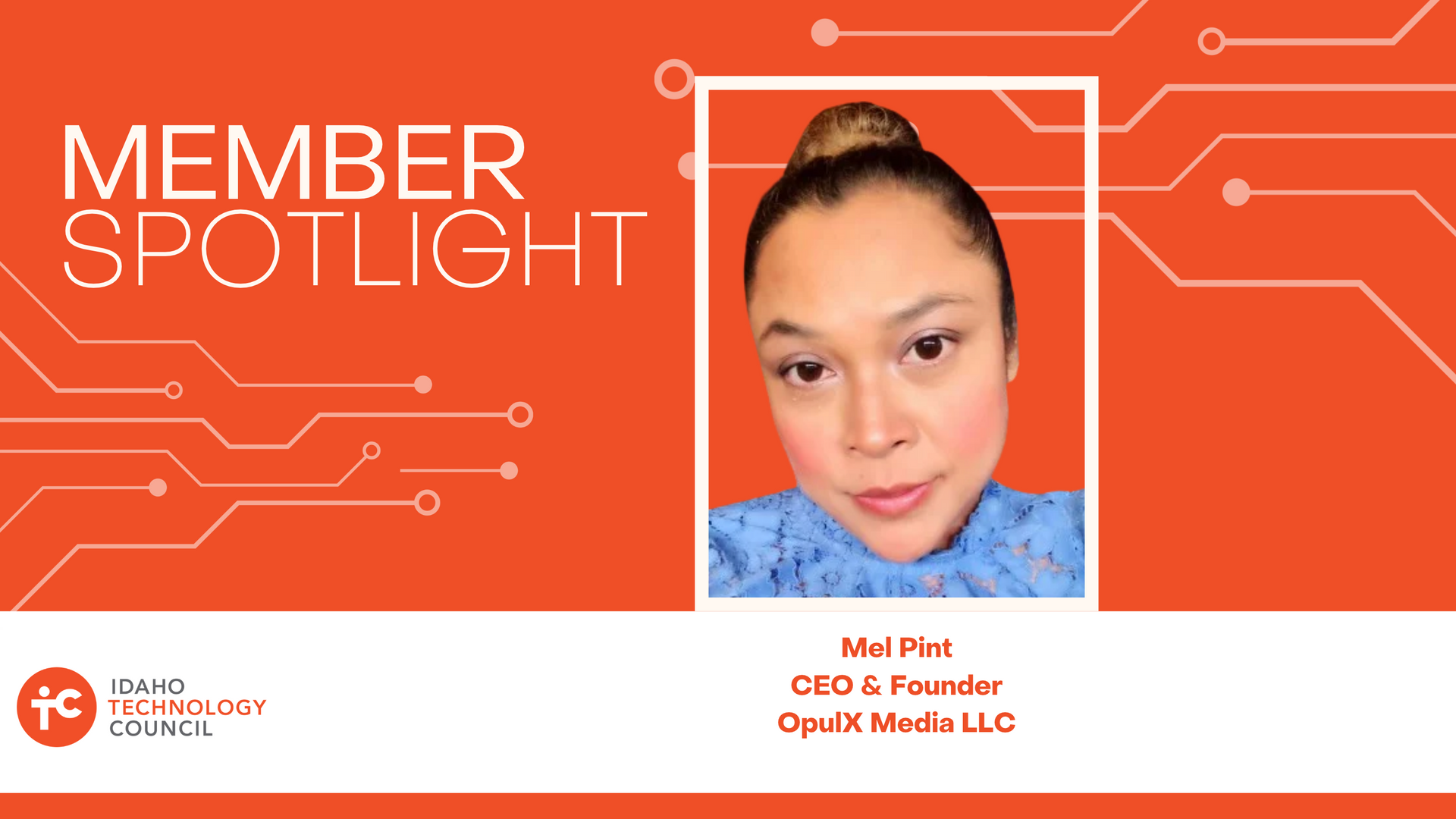
Introducing: Mel Pint, Founder & CEO, OpulX Media LLC Describe the business/organization you work for: OpulX Media LLC is an Idaho-registered live events company and a sister company of OpulenceX Inc., the marketplace where artists sell their work and keep earning royalties when it resells. OpulX Media produces art, fashion and technology showcases built around augmented reality and digital collectibles. Our first production is The Digital Loom: Intersecting Realities at Boise Centre on November 14, 2026: an AR runway, an exhibition of international artists whose every work is registered as a digital twin, and a free afternoon built around The Loom Youth Prize, a statewide art competition for Idaho kids and teens. It is planned as an annual Boise event, with a Honolulu edition in April 2027. What inspired you to start your own business, or why did you decide to work for this specific organization? I watched artists sell a piece once and never see another dollar from it, while the technology that fixes that already existed and nobody was putting it in front of the people who make things. OpulenceX Inc built the tools. OpulX Media exists because tools alone do not change anything; a room full of people watching a garment come alive through their own phone, standing next to a painting a nine-year-old made, does. Boise has a technology community, an arts community and a fashion community, and they rarely stand in the same room. I wanted to build the night where they do. What sets this business apart from others in the industry? Most media companies build audiences and rent them to advertisers. We build a creator economy and stand inside it with the creators. What challenges have you faced as a business owner or employee, and how did you overcome them? Being new. A first-year event with a technology company behind it has to earn standing in the arts community before anyone will put their name next to it. We did that the slow way: a venue contract before any letter went out, a judged youth prize with real cash and real exhibition space, terms for artists that put 70% of every sale in their hands. Joining the Idaho Technology Council was part of the same answer: be inside the community before asking anything of it. What advice would you give to someone looking to join your industry? Decide what you will not do before you decide what you will. Then find the person in your community who has done the hard part for years and ask them how, before you tell them what you are building. About the Idaho Technology Council The Idaho Technology Council (ITC) is a member-based organization that champions innovation and collaboration to grow Idaho’s economy through technology. Representing a dynamic and growing community of entrepreneurs, industry leaders, and policymakers, ITC connects vision with action to position Idaho as a hub for innovation and opportunity. Learn more at www.idahotechcouncil.org .  Connect with Mel Pint on LinkedIn HERE Learn More about OpulX Media HERE
by Tim Munkres • 10 September 2026
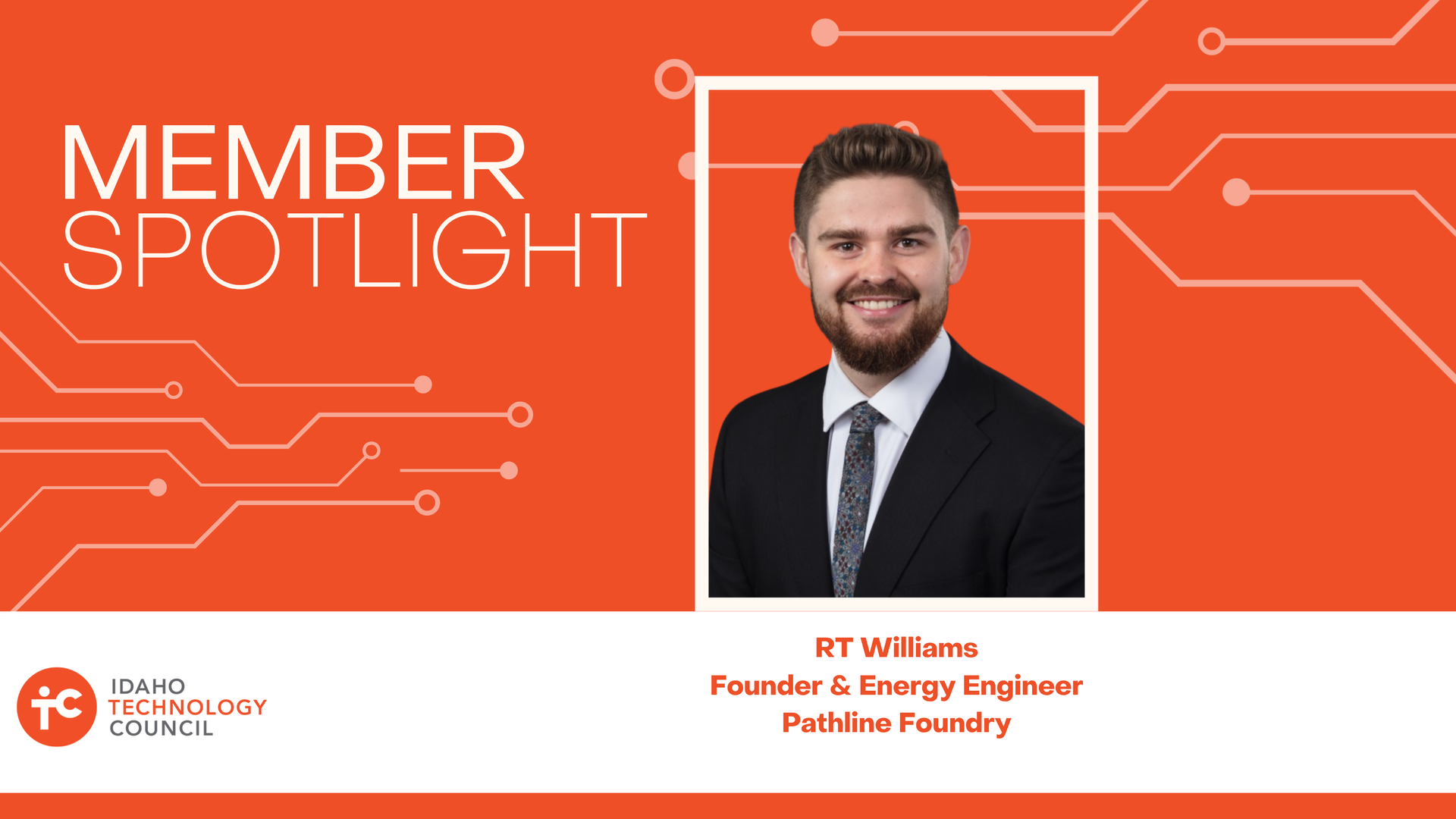
Introducing: RT Williams, Founder & Energy Engineer, Pathline Foundry Describe the business/organization you work for: Pathline Foundry is an independent energy consulting and software firm in Meridian, Idaho. I run the gamut from benchmarking and energy audits to custom software for energy strategy, management, and optimization. It's a niche offering that's widely applicable across many industries. One engineer, start to finish. See where your energy is going, so you can make a smarter decision about where it goes next. What inspired you to start your own business, or why did you decide to work for this specific organization? I want to be the person who stays and partners with those who need it most. I've been doing energy engineering since 2017, and I've kept seeing the same pattern. A building gets an audit report, the report goes on a shelf, and nothing changes. Pathline Foundry grew out of that pattern, and I build software for the same reason: the findings need somewhere to live once the engagement is over, or they end up back on the shelf. Energy gets treated as a fixed cost, a line on the bill you can't do anything about. It isn't. There's real money sitting in waste and inefficiency, and most of the people who could act on it have no spare bandwidth and limited technical staff. I wanted to make that easy to see and easy to act on. What sets this business apart from others in the industry? There's no sales team and no handoff to a junior analyst. You talk to the person doing the engineering, and that same person is still there when it comes time to implement. I build the software side myself too, so the analysis, the modeling, and the tools a client ends up using all come from one place. Where it fits, I take a share of the savings instead of a flat fee, so the work is built to pay for itself. I'm a PhD engineer and a Certified Energy Manager. I write the work so a decision-maker can understand it and an engineer can act on it. What challenges have you faced as a business owner or employee, and how did you overcome them? Starting a business in a state where nobody knows you is a slow problem, and there's no clever fix for it. My family and I moved here in 2025, and I spent a lot of that first year in rooms where I knew one person, or none. What surprised me is that it made the actual work better. I used to lead with what I found in a building. Now I ask what somebody is trying to decide first, because a room full of strangers teaches you quickly that nobody cares what you know until they know why it matters to them. That turns out to be most of the job. Idaho has been more welcoming than I expected. Almost everything I've built here started with someone making an introduction, and I look forward to growing my work to support the community that made room for me. What advice would you give to someone looking to join your industry? Go into the buildings. You can learn modeling and software anywhere, but you can't learn how a facility actually runs from a spreadsheet. Spend time with the people who operate it. They'll tell you things no data set contains, and more often than not, they already know where the waste is. About the Idaho Technology Council The Idaho Technology Council (ITC) is a member-based organization that champions innovation and collaboration to grow Idaho’s economy through technology. Representing a dynamic and growing community of entrepreneurs, industry leaders, and policymakers, ITC connects vision with action to position Idaho as a hub for innovation and opportunity. Learn more at www.idahotechcouncil.org . Connect with RT Williams on LinkedIn HERE Learn More about Pathline Foundry HERE
9 September 2026
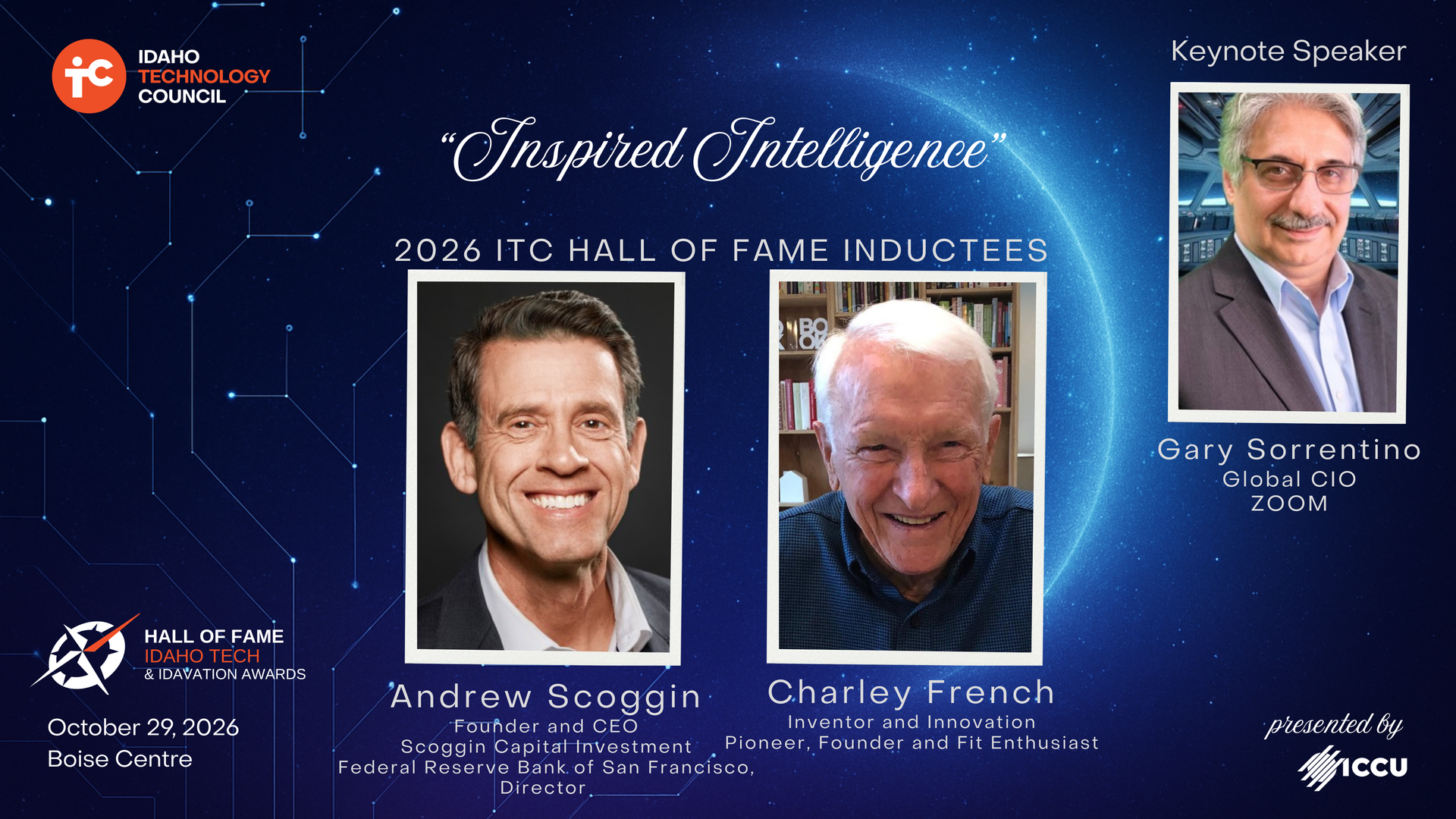
Idaho Technology Council Announces 2026 Hall of Fame Inductees, Idavation™ Award Finalists and Keynote Speaker Gary Sorrentino, CIO, Zoom