Healthy Ecosystems Don’t Happen by Accident — They’re Built


A thriving technology ecosystem is not defined by the number of companies headquartered in a state.

It’s defined by how well we help the next generation of founders succeed.

At the Idaho Technology Council, we spend a great deal of time thinking about what makes an ecosystem durable — not just fast-growing, but resilient. Growth is exciting. But sustainability requires something deeper: a healthy, supported, connected entrepreneurship pipeline.

That pipeline doesn’t build itself.

It requires capital.
It requires mentorship.
It requires visibility.
And it requires intentional platforms that elevate new ideas into real companies.


Why Entrepreneurial Health Matters Now

As Idaho’s technology sector matures, we are entering a new phase.

We have strong companies.
We have national recognition.
We have momentum.

Now the question becomes:
Are we building enough new founders to sustain that growth 10–15 years from now?

In our 2026 Strategic Plan, we introduced a new pillar: Capital & Innovation Investment .

This is not accidental.

Healthy ecosystems depend on:

  • Founder-to-mentor connectivity
  • Early-stage capital access
  • Cross-industry innovation
  • Public-private collaboration
  • Platforms that make innovation visible

If we want Idaho to be a premier tech destination, we must support entrepreneurs before they become headlines.


Why Pitch Competitions Matter More Than We Think

Pitch competitions are often viewed as startup theater — a stage, a deck, a winner.

But in reality, they are ecosystem infrastructure.

They create:

  • Confidence for first-time founders
  • Early validation
  • Investor exposure
  • Community visibility
  • Cross-sector collaboration

They send a signal:
Innovation lives here.

When founders know there is a stage waiting for them, they build differently.

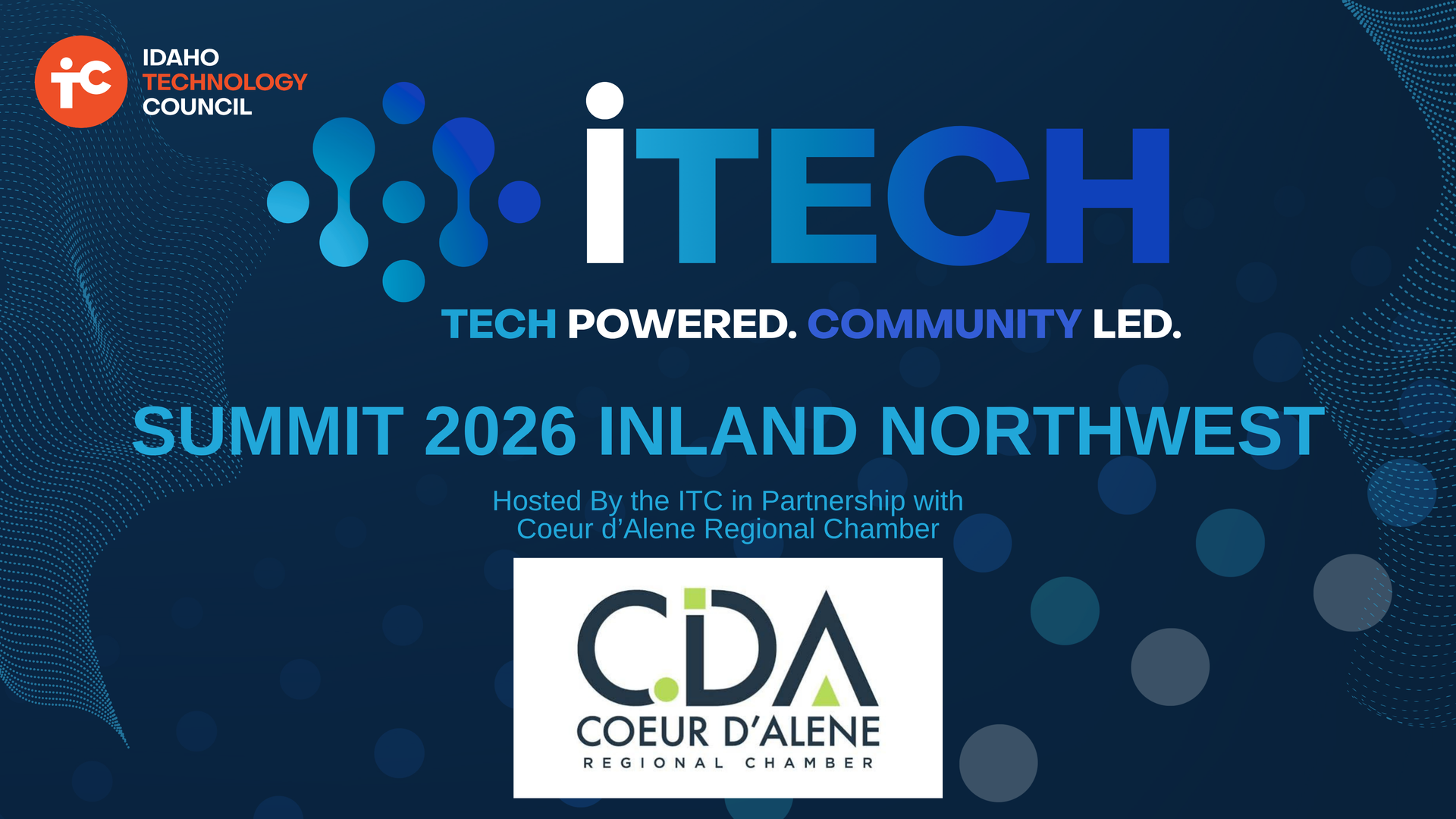
That is why we are intentionally incorporating the IDEA² Pitch Competition into the iTECH Summit.

This isn’t an add-on.

It’s alignment.

The iTECH Summit brings together technology leaders, investors, operators, and policy influencers from across Idaho. By integrating IDEA² into this environment, we’re placing founders directly in front of the ecosystem they need.

Capital meets innovation.
Mentorship meets ambition.
Experience meets bold ideas.

That is how ecosystems compound.


Building the Flywheel

Healthy entrepreneurial ecosystems operate like flywheels:

  1. Founders build companies.
  2. Companies create talent and capital.
  3. Talent and capital reinvest into new founders.
  4. The cycle accelerates.

But flywheels require friction reduction.

That’s our role.

Through our Capital Advisory Group, statewide listening sessions, founder-mentor connections, and now IDEA² at iTECH, we are strengthening the connective tissue of Idaho’s innovation economy .

This is about long-term positioning.

It’s about ensuring that when national capital looks toward Idaho, it sees not just strong companies — but a strong pipeline.


Introducing IDEA² at iTECH Summit

At this year’s iTECH Summit, we will showcase emerging founders through the IDEA² Pitch Competition — a platform designed to elevate bold ideas and connect entrepreneurs to the ecosystem resources they need to scale.

If you are:

  • An early-stage founder with a scalable idea
  • A technologist ready to commercialize innovation
  • A small business leader evolving into tech-enabled growth
  • An investor looking for Idaho’s next wave

This is your stage.

More than a competition, IDEA² represents our belief that innovation should be visible, celebrated, and supported.

Because ecosystems don’t grow in silence.

They grow when leaders show up.


A Call to the Ecosystem

If you are a CEO, investor, board member, or policy leader — your presence matters.

Entrepreneurial ecosystems strengthen when experienced operators:

  • Serve as judges
  • Offer mentorship
  • Open networks
  • Invest capital
  • Provide real feedback

The next generation of Idaho technology leaders is watching.

The question is not whether innovation is happening.

It is whether we are creating enough access, alignment, and amplification for it to scale.

That’s the work.

And it’s why IDEA² at iTECH is more than a program addition — it’s a strategic signal about where Idaho is headed.

If we want Idaho to be known nationally as a premier tech destination, we must be intentional about nurturing the founders who will define the next decade.

Let’s build the flywheel — together.


About the Idaho Technology Council
The Idaho Technology Council (ITC) is a member-based organization that champions innovation and collaboration to grow Idaho’s economy through technology. Representing a dynamic and growing community of entrepreneurs, industry leaders, and policymakers, ITC connects vision with action to position Idaho as a hub for i
nnovation and opportunity. Learn more at www.idahotechcouncil.org.

by Tim Munkres 11 February 2026
Introducing: Aditya Ravindra, Enterprise AI & Analytics Expert, InterMountain AI Consultants Describe the business/organization you work for: InterMountain AI Consultants helps small and medium-sized businesses transform data chaos into competitive advantages. I specialize in sifting through complex details and compiling them into actionable insights—and no, it's not as boring as it sounds. Here's a real example from this week: A local Idaho-based moving and storage company was drowning in spreadsheets, unable to see their financial picture in realtime. I built them a custom financial dashboard that consolidates revenue, expenses, and profitability metrics into live visualizations they can access from any device. Now their leadership team makes data-driven decisions in minutes instead of spending hours digging through Excel files. The dashboard transforms their raw operational data into clear insights about which services are most profitable, seasonal trends, and cash flow patterns. Simply put: data talks, I listen, and I help business leaders join the conversation. What inspired you to start your own business, or why did you decide to work for this specific organization? Scope and impact. I currently work as a Senior Data Consultant at a Fortune 5 healthcare company, where every day presents new challenges at enterprise scale. While pursuing my Master's in AI from UT Austin, I've found it incredibly rewarding to apply cutting-edge theories to realworld problems. However, working within a large organization often means being channeled into specific projects. I wanted to branch out—to create customized solutions across diverse industries and help regional businesses access enterprise-level AI expertise. I need variety to thrive, and consulting allows me to bring Fortune 500 methodologies to local Idaho businesses who need them most. What sets this business apart from others in the industry? Continuous education and cutting through the AI hype. My approach isn't just about degrees and credentials—it's about staying on the cutting edge. I regularly complete the latest training workshops, AI certifications, and technical courses to understand what's actually emerging in AI versus what's just buzzwords. This knowledge lets me guide businesses toward practical, ROI-driven solutions rather than expensive experiments. I translate complex AI capabilities into business language and help leaders understand what will actually move the needle for their specific operations. Think of me as an AI translator who speaks both data science and business outcomes. What challenges have you faced as a business owner or employee, and how did you overcome them? The biggest challenge is navigating client fear and skepticism around AI. Many business leaders feel overwhelmed by AI hype or worry about implementation complexity. I've turned this into my superpower—I guide clients through the noise toward what's genuinely useful for their specific needs, distinguishing practical tools from empty promises. The second challenge is the "how"—designing the optimal customized solution from thousands of possible approaches. While sometimes overwhelming, this is also the most rewarding part. Each client's unique data environment requires creative problem-solving, and finding that perfect fit between their needs and the right AI tools keeps the work engaging. What advice would you give to someone looking to join your industry? Three pieces of advice: First, just start. Don't wait for perfect conditions—pick a course, open your laptop, and begin. We're at the ground floor of AI, and this opportunity won't last forever. Second, embrace failure as education. Not every approach will work, but each failure teaches you what will succeed next time. The projects that work best are often built on lessons from the ones that didn't. Third, find ways to make it fun. Every job has monotonous moments, but approaching AI problems creatively keeps both learning and application enjoyable. The intersection of curiosity, persistence, and practical application is where real value emerges. About the Idaho Technology Council The Idaho Technology Council (ITC) is a member-based organization that champions innovation and collaboration to grow Idaho’s economy through technology. Representing a dynamic and growing community of entrepreneurs, industry leaders, and policymakers, ITC connects vision with action to position Idaho as a hub for i nnovation and opportunity. Learn more at www.idahotechcouncil.org . Connect with Aditya on LinkedIn HERE Check out InterMountain AI Consultants HERE
by Diane Temple 14 January 2026
From 'I Can't Code' to 'I Just Built That': My AI-Powered Learning Journey Three months ago, if you had told me I'd be writing HTML code, reading through stylesheets, and launching custom landing pages for the Idaho Technology Council, I would have laughed. Not because I didn't want to learn—but because "coding" felt like someone else's domain. I had my lane. They had theirs. Then I got curious. The Shift: From Consumer to Creator Like many leaders, I'd been using AI tools to write faster, research better, and think more clearly. But I hadn't considered that these tools could help me build things I'd previously built using drag and drop features which worked but also very time consuming. The breakthrough came when I stopped asking "Can AI do this for me?" and started asking "Can AI teach me to do this myself?" Working with Claude, I didn't just get a landing page delivered to me. I got to make one. Together. And then another. And another. What Actually Happened Here's the thing nobody tells you about "vibe coding" with AI: it's not about becoming a developer. It's about becoming conversational with technology. I'd describe what I needed: "This section needs to feel more welcoming. Can we add testimonials here? The Idaho map should be more prominent." Claude would generate the code. I'd look at it—really look at it. Ask questions. "What does this section do? Why is this formatted this way?" Then I'd start making my own edits. Small ones at first. Changing colors. Adjusting text. Then bigger ones. Restructuring sections. Adding new components. The Leveling of the Playing Field This matters beyond my personal learning curve. As CEO of a technology trade association, I'm constantly advocating for Idaho's tech ecosystem, talking about innovation, championing digital transformation. But there was still this gap between my advocacy and my personal technical fluency. Now? I can have different conversations. I understand what's possible. I can prototype ideas quickly. I can evaluate vendor proposals with fresh eyes. I can teach my team to do the same. For the Curious, Not the Credentialed Here's what I want other nonprofit leaders, association executives, and "non-technical" professionals to know: You don't need a computer science degree. You need curiosity and willingness to try. You don't need to become an expert. You need to become conversant enough to ask better questions and make informed decisions. You don't need expensive developers for everything. You need to know when to DIY and when to bring in specialists—and AI helps you understand that distinction. The barrier to entry for digital creation has fundamentally changed. The question is no longer "Can I afford to build this?" but "Am I willing to learn how?" The Broader Implications This shift has implications for: Workforce development : We're preparing people for jobs that require "traditional" coding when AI-assisted development might be the actual future Organizational agility : Teams that embrace AI collaboration can iterate faster and reduce dependency on external resources Leadership literacy : Executives who understand how to work with AI tools are better positioned to guide their organizations through digital transformation Economic access : Smaller organizations and rural communities (like many ITC members) can compete with better-resourced peers The Idaho Advantage Idaho has always punched above its weight in technology because we're scrappy, curious, and willing to figure things out. We don't have the luxury of waiting for someone else to solve our problems. This AI-collaborative approach to building? It's very Idaho. Very, "let me see if I can do this myself first." And it's working. An Invitation If you've been curious about AI but haven't found your entry point, consider this: What's something you've always outsourced because you "didn't know how"? What if you asked AI to teach you instead of just doing it for you? The landing pages I built aren't perfect. They don't need to be. They're mine. I understand every section. I can modify them when priorities shift. I can teach others to do the same. That's power. That's capability. That's the future of work. And it's available to anyone willing to ask: "What if I could?" Then do. - Diane Temple, ITC President and CEO About the Idaho Technology Council The Idaho Technology Council (ITC) is a member-based organization that champions innovation and collaboration to grow Idaho’s economy through technology. Representing a dynamic and growing community of entrepreneurs, industry leaders, and policymakers, ITC connects vision with action to position Idaho as a hub for innovation and opportunity. Learn more at www.idahotechcouncil.org .