Layne is a member of the Idaho Technology Council

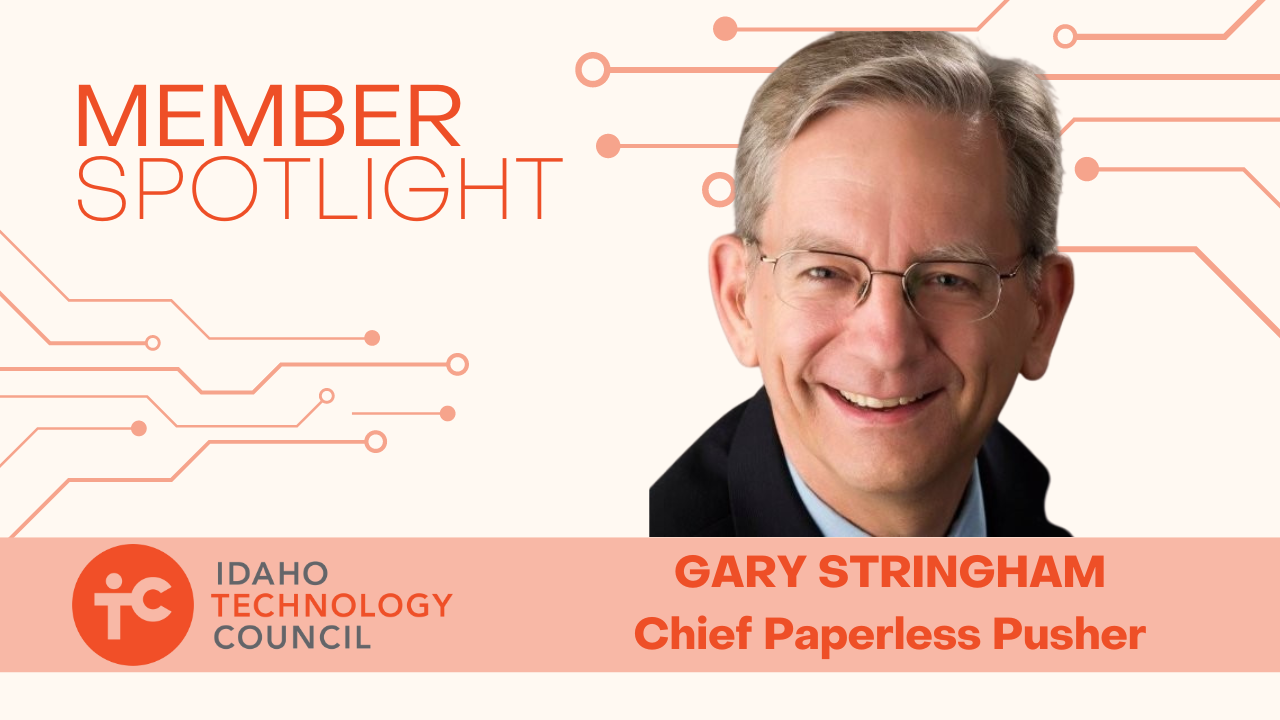
Introducing Gary Stringham, Chief Paperless Pusher


Describe the business/organization you work for

For two decades, companies have attempted to get their customers to switch to paperless bills and statements. However, most studies show that 50 to 70 percent still get paper copies. Cubby Paperless has developed patented technology which delivers paperless copies via an online platform. This service helps businesses and end consumers reduce their environmental impact while improving efficiency in their businesses and lives.


What inspired you to start your own business, or why did you decide to work for this specific

organization?

I was an end consumer getting my bills and statements on paper but was nagged by companies to go paperless. But I had also been an engineer in Hewlett-Packard's printer business and I knew the cost of paper, printing, and postage and why companies were trying so hard to get their customers to switch. I saw that today's solutions were having an opposing effect on each other, leaving one side winning at the expense of the other. Eventually I developed a solution that made it a win-win for both sides, and I started Cubby Paperless to deliver that win-win service.


What sets this business apart from others in the industry?

Businesses delivering paperless bills and statements only deliver their own, forcing end consumers to log into several company websites, many of which are cumbersome, to get their paperless copy. Cubby consolidates these documents from multiple companies and

delivers them to end consumers under one login. A few other companies have tried to provide the consolidating service but have been

forced to shutter their operations due to increasing cybersecurity requirements. Using the patented technology, Cubby acquires the documents in a more secure manner and provides them to the end consumers.


What challenges have you faced as a business owner or employee, and how did you overcome them?

Cubby has a B2C side and it has been warmly received by end consumers, most of whom cannot wait to get their bills and statements on Cubby. However, Cubby also has a B2B side, in that companies need to sign on for Cubby. The B2B sales process of finding and talking to the right person within a company, and making a sale, is a challenge, especially for an "enginerd".


What advice would you give to someone looking to join your industry?

When starting a company, it helps to have a good handle on the market, the problem, and existing solutions. While I would not have considered myself an expert in the paper and paperless bill and statement industry in the beginning, I know a lot more now and can speak confidently on the subject. Don't be shy about looking into what appears to be a competitor or a competing solution. By understanding it in depth, you will learn more and can strengthen your own offering.


Connect with Gary on LinkedIn HERE

Check out Cubby Paperless on their website HERE

by Tim Munkres • 7 October 2026
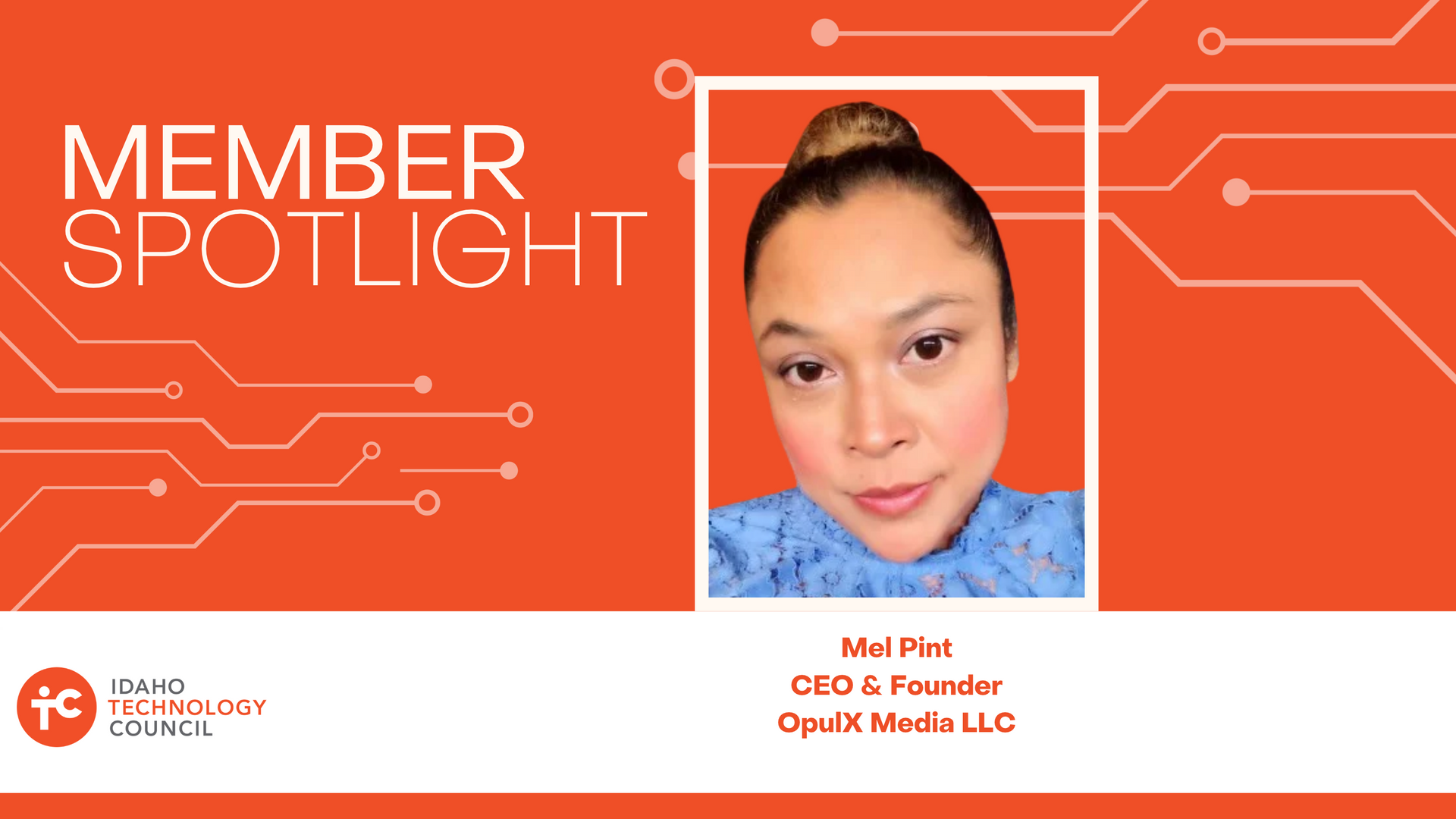
Introducing: Mel Pint, Founder & CEO, OpulX Media LLC Describe the business/organization you work for: OpulX Media LLC is an Idaho-registered live events company and a sister company of OpulenceX Inc., the marketplace where artists sell their work and keep earning royalties when it resells. OpulX Media produces art, fashion and technology showcases built around augmented reality and digital collectibles. Our first production is The Digital Loom: Intersecting Realities at Boise Centre on November 14, 2026: an AR runway, an exhibition of international artists whose every work is registered as a digital twin, and a free afternoon built around The Loom Youth Prize, a statewide art competition for Idaho kids and teens. It is planned as an annual Boise event, with a Honolulu edition in April 2027. What inspired you to start your own business, or why did you decide to work for this specific organization? I watched artists sell a piece once and never see another dollar from it, while the technology that fixes that already existed and nobody was putting it in front of the people who make things. OpulenceX Inc built the tools. OpulX Media exists because tools alone do not change anything; a room full of people watching a garment come alive through their own phone, standing next to a painting a nine-year-old made, does. Boise has a technology community, an arts community and a fashion community, and they rarely stand in the same room. I wanted to build the night where they do. What sets this business apart from others in the industry? Most media companies build audiences and rent them to advertisers. We build a creator economy and stand inside it with the creators. What challenges have you faced as a business owner or employee, and how did you overcome them? Being new. A first-year event with a technology company behind it has to earn standing in the arts community before anyone will put their name next to it. We did that the slow way: a venue contract before any letter went out, a judged youth prize with real cash and real exhibition space, terms for artists that put 70% of every sale in their hands. Joining the Idaho Technology Council was part of the same answer: be inside the community before asking anything of it. What advice would you give to someone looking to join your industry? Decide what you will not do before you decide what you will. Then find the person in your community who has done the hard part for years and ask them how, before you tell them what you are building. About the Idaho Technology Council The Idaho Technology Council (ITC) is a member-based organization that champions innovation and collaboration to grow Idaho’s economy through technology. Representing a dynamic and growing community of entrepreneurs, industry leaders, and policymakers, ITC connects vision with action to position Idaho as a hub for innovation and opportunity. Learn more at www.idahotechcouncil.org .  Connect with Mel Pint on LinkedIn HERE Learn More about OpulX Media HERE
by Tim Munkres • 10 September 2026
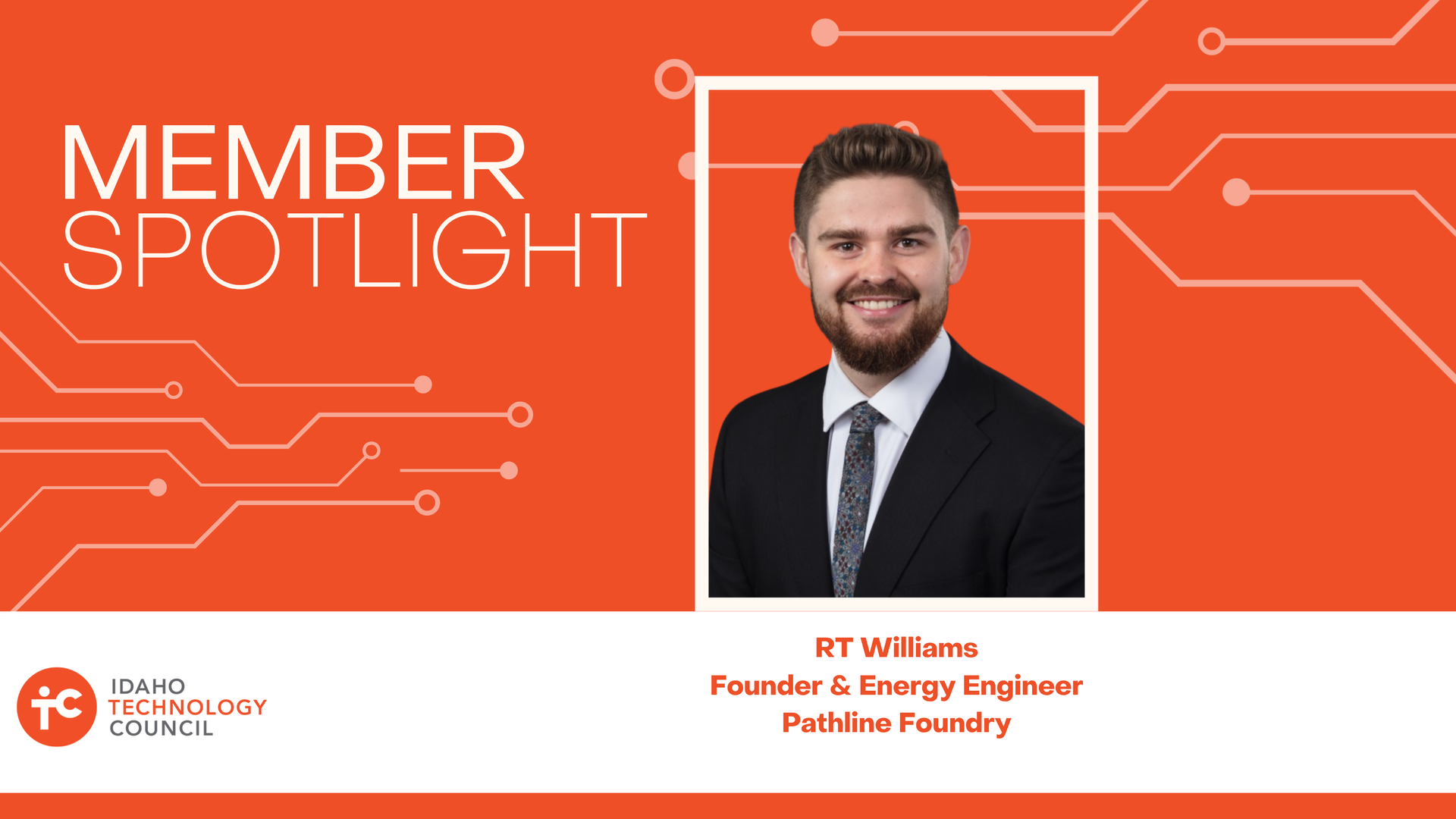
Introducing: RT Williams, Founder & Energy Engineer, Pathline Foundry Describe the business/organization you work for: Pathline Foundry is an independent energy consulting and software firm in Meridian, Idaho. I run the gamut from benchmarking and energy audits to custom software for energy strategy, management, and optimization. It's a niche offering that's widely applicable across many industries. One engineer, start to finish. See where your energy is going, so you can make a smarter decision about where it goes next. What inspired you to start your own business, or why did you decide to work for this specific organization? I want to be the person who stays and partners with those who need it most. I've been doing energy engineering since 2017, and I've kept seeing the same pattern. A building gets an audit report, the report goes on a shelf, and nothing changes. Pathline Foundry grew out of that pattern, and I build software for the same reason: the findings need somewhere to live once the engagement is over, or they end up back on the shelf. Energy gets treated as a fixed cost, a line on the bill you can't do anything about. It isn't. There's real money sitting in waste and inefficiency, and most of the people who could act on it have no spare bandwidth and limited technical staff. I wanted to make that easy to see and easy to act on. What sets this business apart from others in the industry? There's no sales team and no handoff to a junior analyst. You talk to the person doing the engineering, and that same person is still there when it comes time to implement. I build the software side myself too, so the analysis, the modeling, and the tools a client ends up using all come from one place. Where it fits, I take a share of the savings instead of a flat fee, so the work is built to pay for itself. I'm a PhD engineer and a Certified Energy Manager. I write the work so a decision-maker can understand it and an engineer can act on it. What challenges have you faced as a business owner or employee, and how did you overcome them? Starting a business in a state where nobody knows you is a slow problem, and there's no clever fix for it. My family and I moved here in 2025, and I spent a lot of that first year in rooms where I knew one person, or none. What surprised me is that it made the actual work better. I used to lead with what I found in a building. Now I ask what somebody is trying to decide first, because a room full of strangers teaches you quickly that nobody cares what you know until they know why it matters to them. That turns out to be most of the job. Idaho has been more welcoming than I expected. Almost everything I've built here started with someone making an introduction, and I look forward to growing my work to support the community that made room for me. What advice would you give to someone looking to join your industry? Go into the buildings. You can learn modeling and software anywhere, but you can't learn how a facility actually runs from a spreadsheet. Spend time with the people who operate it. They'll tell you things no data set contains, and more often than not, they already know where the waste is. About the Idaho Technology Council The Idaho Technology Council (ITC) is a member-based organization that champions innovation and collaboration to grow Idaho’s economy through technology. Representing a dynamic and growing community of entrepreneurs, industry leaders, and policymakers, ITC connects vision with action to position Idaho as a hub for innovation and opportunity. Learn more at www.idahotechcouncil.org . Connect with RT Williams on LinkedIn HERE Learn More about Pathline Foundry HERE
9 September 2026
Idaho Technology Council Announces 2026 Hall of Fame Inductees, Idavation™ Award Finalists and Keynote Speaker Gary Sorrentino, CIO, Zoom